PLO5 Glossary
Terms and abbreviations used throughout this site
Strategy articles on this site use a fair amount of shorthand. Here are the terms you will meet most often, in alphabetical order.
| Term | Meaning |
|---|---|
| Backdoor draw (BD, BDFD) | A draw that needs both the turn and the river, e.g. two cards of a suit on the flop with one of that suit on the board. BDFD = backdoor flush draw. |
| Block bet | A small bet, usually on the river and out of position, made to see a cheap showdown and to stop the opponent from betting bigger. |
| Blocker | A card in your hand that makes certain holdings impossible or less likely for your opponent. Holding the ace of a suit blocks the nut flush. |
| Broadway | Cards ten or higher (T, J, Q, K, A). |
| C-bet | Continuation bet: a bet by the preflop aggressor on the next street. |
| Capped range | A range that cannot contain the strongest hands because of earlier actions, e.g. a player who only called preflop rarely has aces. |
| Cold call / cold 4-bet | Calling (or 4-betting) when you have not yet put money in voluntarily, facing a raise and possibly a re-raise. |
| Dangler | A card that does not connect with the rest of the hand, e.g. the 3 in KQJT3. |
| Delayed c-bet | A c-bet on the turn after the preflop aggressor checked the flop. |
| Domination | When two hands draw to the same kind of hand but one draws to a better version, e.g. nut flush draw versus king-high flush draw. |
| Donk bet / lead | A bet out of position into the player who was the aggressor on the previous street. |
| Double-suited (DS) | Two cards of one suit and two of another. In PLO5 the fifth card is either a third suit (pure) or one of the two suits (double-triple). |
| Double-suited pure | Exactly two cards of each of two suits plus a fifth card of a third suit (2-2-1). The strongest suit structure. |
| Double-triple-suited | Three cards of one suit and two of another (3-2). Still double-suited, but the third card blocks your own flush outs. |
| Equity | Your share of the pot if all cards were dealt out with no further betting. |
| Equity realization | How much of your raw equity you actually win, given future betting. Position and nut potential increase it. |
| FD / NFD | Flush draw / nut flush draw. |
| Gap | A missing rank inside a rundown, e.g. JT87x has one gap (the nine). |
| Gutshot | An inside straight draw with four outs. |
| IP / OOP | In position / out of position. |
| Isolation raise (iso) | A raise against one or more limpers, aiming to play heads-up. |
| MDF | Minimum defense frequency: how often you must continue against a bet to stop bluffs from being automatically profitable. |
| Merged range | A betting range that includes strong and medium hands rather than only very strong hands and bluffs. |
| Nut / nuts | The best possible hand at the moment. The "second nuts" is the next best. |
| Nut suit | The suit in which you hold the ace, giving you nut flush potential. |
| Nuttiness | How often a hand makes or draws to the nuts. The most important quality of a PLO5 hand. |
| Polarized range | A range made of very strong hands and bluffs, with few medium-strength hands. |
| Probe bet | A bet out of position on the turn after the in-position preflop aggressor checked back the flop. |
| Pulling hand | A hand that prefers to call preflop and keep more players in the pot, because it profits from multiway action (e.g. a hand with the nut suit and set value). |
| Pushing hand | A hand that prefers to 3-bet to narrow the field and push out equity behind it. |
| RFI | Raise first in: an opening raise when everyone before you has folded. |
| Rundown | Connected cards, e.g. JT987. A 5-card rundown uses all five cards; a 4-card rundown has one dangler. |
| Single-suited (SS) | Exactly two cards of one suit and three different other suits (2-1-1-1). |
| SPR | Stack-to-pot ratio: effective stack divided by the pot on the flop. |
| Squeeze | A 3-bet after a raise and one or more calls. |
| Static / dynamic board | A static board changes little on later streets (paired, monotone); a dynamic board has many draws and many turn cards change the nuts. |
| Triple-suited / quad-suited / monotone | Three, four or five cards of one suit with no second suited pair. These structures block your own flush outs. |
| Wrap | A straight draw with more than eight outs, possible because Omaha hands hold several connected cards. |
Hand notation
Cards are written as rank followed by suit: Ace, King, Queen, Jack, Ten, then 9–2; suits are spades, hearts, diamonds, clubs. "AsKsQhJhTd" is therefore ace-king of spades, queen-jack of hearts and the ten of diamonds. When suits don't matter, hands are written without them, e.g. "AAK95" or "KKxxx" where x is any card.
Hand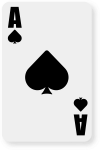
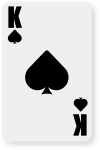

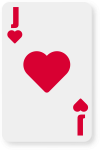

AsKsQhJhTd: double-suited pure
Board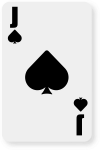
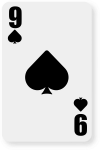
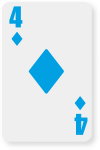
Board Js9s4d: a two-tone flop with two spades