River Value Betting
How thin can you go, and how big should you bet?
On the river there are no more cards to come. A bet is either a value bet — you expect worse hands to call — or a bluff. This article is about the first kind: how thin you can go, and how big you should bet.
The basic test
Before value betting, name the worse hands that will call. Not "he could have something", but concrete holdings: a lower flush, a straight with no flush blocker, a set on a flush board, top two pair. If you can list plenty of them and the better hands that call are fewer, bet. If you struggle to find worse calling hands, check.
How thin depends on the line
- After aggressive lines (bet-bet or raise-call), ranges are strong. Value bets need strong hands.
- After passive lines (check-check on the flop and turn), the in-position player has removed most of his strong hands from his range. The player who checked gains a range advantage on the river, and surprisingly thin value bets become possible. A rough way to find them is to build an approximation of the checked-back range, remove the hands that would have bet, and look for the weakest hand that still has more than about 50% equity against what remains.
The river after two checked streets is also where small block bets shine.
Choose the size by who calls
Bigger bets only make sense if enough worse hands will call them. Think about what your opponent's calling range looks like at different sizes:
- Large bets (¾ pot to pot) target hands that feel strong: lower flushes, straights with redraws that missed, sets. Use them when your hand beats those and your opponent has many of them.
- Small bets (¼–⅓ pot) target weaker made hands that would fold to a large bet. In many games, especially at lower stakes, players are happy to call small bets with second-best flushes and straights but fold them to pot-sized bets.
Many players currently under-bluff rivers, and their opponents know it. That makes big river bets less likely to get called by medium hands. If you suspect your opponent will only call a big bet with hands that beat you, size down.
Blockers matter for value too
Your blockers change what your opponent can call with. If you hold cards that remove his likely calling hands, your value bet gets called less often. A hand like the second-nut flush that also holds a card blocking the nut straight on a straight-and-flush board is less valuable as a bet than one that unblocks it. When your hand blocks most of the calling range, consider checking and inducing a bluff — or betting small.
Example: the nut flush on a connected river

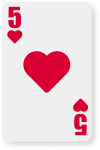
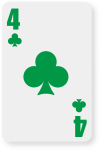
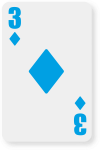
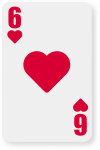
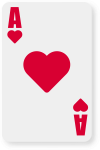

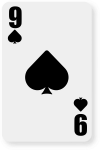
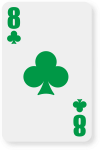

You check-called the turn out of position, and the river brings a third heart. Several straights were already possible, so your opponent's turn betting range contains many of them. You hold the ace-high flush. Leading is reasonable: straights and lower flushes will call, while a check risks the straights checking back. The same line also works as a bluff with hands such as the king of hearts, which blocks the second-nut flush — see River Bluffing and Blockers.
Common mistakes
- Checking the nuts "to induce" against players who never bluff. Inducing only works if your opponent bluffs. In many games it is better to bet thin for value than to hope for a bluff.
- Betting big with medium hands after a passive line. You only get called by better.
- Missing value with strong but non-nut hands because "he might have the nuts". If he can have many worse hands, bet.