Playing Pocket Aces Preflop
Not all aces are created equal in 5-card PLO
You are dealt a pair of aces in 4.17% of 5-card hands — about 60% more often than in 4-card PLO. Aces are still the best pair, but the three side cards create a huge spread in strength. The best aces are among the strongest hands in any form of Omaha; the worst ones rank barely inside the top third of all hands. Playing every AAxxx the same way is one of the most common and most expensive leaks in the game.
Side cards and suits decide the value
Take the same aces with weak side cards, A-A-9-5-2, and change only the suits. From best to worst, the suit structures rank roughly like this — and the best version is a top-few-percent hand while the worst falls to around the top fifth of all hands:
- Double-suited pure, both suits ace-high
- Double-triple-suited
- Double-suited with one low suit
- Single-suited to an ace
- Triple-suited to an ace
- Quad-suited
- Single-suited with neither ace suited
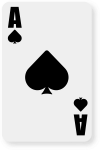


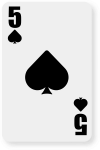
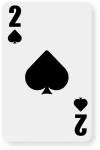
Equity rankings understate the gap, because they ignore playability. Quad- and triple-suited aces play far worse after the flop than their raw equity suggests.
Opening: always raise aces
With exactly two aces, open from every position. The very few aces a solver folds are trips or quads with poor side cards, and the difference in expected value is negligible, so "always open aces" is a perfectly good simplification.
Facing a single raise
- You almost never fold. The exception is the small blind against an early position raise: the opener's range is full of aces and single ace blockers, and with a player still behind you, roughly one in ten of your weakest aces can be folded.
- In position you 3-bet most aces — roughly 70–90% depending on how wide the opener is. The rest call.
- Out of position you 3-bet less, roughly half to three quarters. Against a tight early position open from the big blind, many aces simply call.
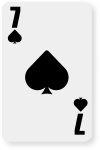
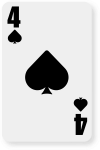
Which aces call? Mainly trip-suited and quad-suited hands, and aces with low, disconnected side cards. Double-suited aces 3-bet in position almost every time, even with poor side cards; aces with a single nut suit 3-bet most of the time.
Multiway: more players, more folds
This is where PLO5 differs most from 4-card PLO. Facing a raise and several callers, the chance that someone holds a better ace hand — or just a single ace that kills your set outs — rises sharply. Approximate fold frequencies with aces after an early position open:
| Situation | Fold aces |
|---|---|
| Heads-up against the raise, in position | ~0–2% |
| Raise and one caller | ~8% |
| Raise and two callers | ~13% |
| Raise and four callers (big blind) | ~40% |
Weak aces want to flop top set to continue; in a five-way pot that rarely happens and rarely holds. Against very weak opponents you can defend a little wider, but don't treat aces as an automatic squeeze in multiway pots.
Facing a 3-bet after opening
In 4-card PLO you 4-bet almost all aces. In PLO5:
- Out of position, against a tight 3-bettor, you 4-bet roughly 70–75% of aces, call most of the rest and fold only the very worst.
- In position the 4-bet share depends on the 3-bettor's range: around 70% against a wide small blind 3-bet, under 50% against a tight big blind 3-bet against an early position open.
- The 4-betting part of the range is linear: your best aces 4-bet, your worst ones call. Don't flat the strongest aces "to trap".
Cold 4-betting
Facing a raise and a 3-bet before you act, aces are no longer automatic. Against two tight ranges (for example an early open and a middle position 3-bet) you fold roughly a quarter of your aces, call some and 4-bet about two thirds. Against wide ranges, such as a button open and a small blind 3-bet with you in the big blind, you 4-bet around 90% and fold almost nothing.
After flatting: should you back-raise?
If you flat a raise with aces and someone squeezes behind you, it is tempting to put the rest in. But the aces you flatted were already your weaker aces. Against a squeeze and a caller, roughly half of those aces should simply call again. A trip- or quad-suited, disconnected AAxxx often has barely more equity than the field when three ranges are involved, and it will struggle to realise even that after the flop.
Aces checklist: How many suits, and are they ace-high? Any third or fourth card of a suit? Are the side cards high and connected, or low and disconnected? How many players are already in, and how tight are they?
To see how aces play after the flop at low SPR, read Playing 4-Bet Pots and 3-Bet Pots and Stack-Off Thresholds.
Frequencies are approximate values from 100 big blind, 6-max solver studies with typical rake.