Domination: Why Equities Don't Really "Run Close"
The single most important postflop concept in PLO5
"Equities run so close in five-card that you have to bet big and protect everything." You will hear some version of this sentence at every PLO5 table. It contains a grain of truth and a large error, and understanding the difference is the foundation of good postflop play.
Range versus range: yes, close
Preflop ranges in PLO5 are very diverse. Every player holds five cards, so both players connect with most flops in some way, and the overall equity split between two ranges is usually closer to 50/50 than in 4-card PLO or Hold'em. Large range advantages on the flop are rarer.
Hand versus hand: often not close at all
Inside those ranges, individual matchups are frequently lopsided. The fifth card does not just give everyone "more equity"; it gives everyone more overlapping holdings. When two players draw to the same kind of hand, one of them usually draws to a better version. All examples below are exact flop equities with two cards to come.
Example 1: the dominated flush draw
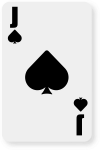
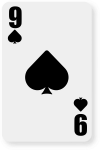

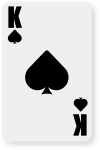
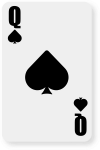

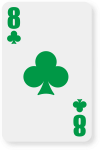
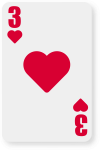
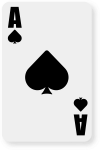
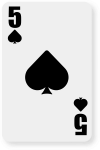

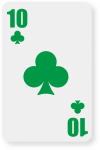
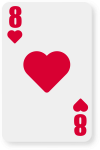
Both hands look like monster draws. One of them is a better than 2-to-1 favourite, because every spade that completes both flushes goes to the ace.
Example 2: top two pair is not a monster

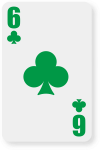


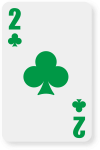

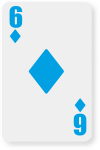
Even adding an open-ended straight draw to the two pair (J-T-9-8) only brings it to about 49% against the same type of wrap. In 4-card PLO, top two pair on a rainbow board is a comfortable stack-off at most depths. In PLO5 it is often a hand you want to play for a small pot.
Example 3: multiway destroys non-nut hands
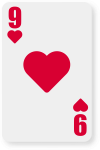
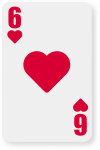
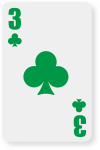


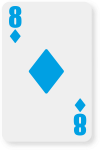
Heads-up against a nut flush draw with a wrap, this hand has 29%. Add a third player holding a set of sixes, and its equity falls to 7%. In a multiway pot, a hand that is "strong but not the nuts" is often close to drawing dead.
What this means for your strategy
- Build big pots with nut potential. Nut flush draws, nut wraps, top sets and combinations of them are what you want when stacks go in.
- Keep pots smaller with non-nut hands. King-high flush draws, bottom ends of straights, bare two pairs and bare overpairs are hands to check, call and evaluate — not hands to shove with.
- Blockers matter more. Holding the ace of the flush suit, or cards that block the top straight, changes both your opponent's range and your own equity.
- Static runouts polarize ranges. When a flush or straight completes, lower flushes and straights are often drawing almost dead against higher ones. Betting frequencies drop, bet sizes get smaller and the idea of "folding out equity" becomes less relevant.
Hand character: test against the hand above and below
Equity against a whole range hides how your hand performs in the situations that matter. A useful habit when reviewing a hand is a two-sided test:
- Pick a hand from your opponent's range that is just a little stronger than yours.
- Pick one that is just a little weaker.
- Check your equity against both.
A hand that is crushed by the slightly stronger hand but only slightly ahead of the slightly weaker one has poor hand character: when you win, you win a little; when you lose, you lose a lot. Pure made hands without draws (bare two pair, bare overpairs) and non-nut draws usually fail this test. Hands with several nutted components — a set plus a nut flush draw, a nut wrap plus a pair — pass it, and those are the hands to put money in with.
Remember: close range equities are a reason to think carefully about bet sizes and frequencies — not a reason to bet big and stack off with everything.