River Bluffing and Blockers
Choosing the right hands to bluff with
A river bluff wins when your opponent folds a better hand. In PLO5 you hold five cards, which means you have more information about what your opponent can and cannot hold than in any other common poker game. Good bluffing is mostly about using that information.
The two rules of blockers
- Block his calls. Hold cards that make his likely calling hands less likely: the nut flush blocker, cards that complete the top straight, cards that pair the board for full houses.
- Unblock his folds. Avoid holding the cards that make up the hands you want him to fold. If you want him to fold missed draws and one-pair hands, don't hold those draws and pairs yourself.
Example: a small blocker bluff
Say you defended the big blind against a small raise, the flop and turn checked through, and the river completes a possible straight and a possible flush. Your hand has no showdown value at all, but it holds the five of diamonds — a card that blocks the straight and the flush. Your opponent's range is capped after checking twice. This is a clear bluff spot.

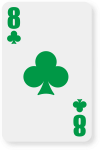
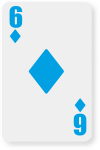
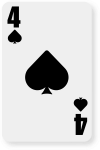
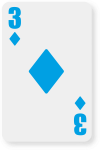
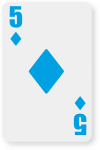
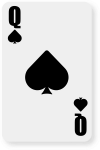
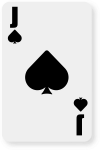

But note what else your hand blocks. If it also holds an ace, a queen and a jack, it removes many of the medium hands your opponent would fold. Such a hand bluffs less efficiently than one with the same five of diamonds and low, irrelevant side cards. That is why a small bet suits it: it only needs to fold a capped range, not hands strong enough to call a big bet.
Bluffing needs stronger blockers in strong ranges
The tighter and stronger your opponent's range, the stronger your bluffing hands need to be in terms of blockers. In wide heads-up pots you can bluff with bottom pair; in tight or multiway pots, typical bluffs move up to top pair and even two pair with excellent blockers, because those block the hands that continue. Bluffing a hand that has decent showdown value feels wrong, but if it rarely wins at showdown and blocks the nuts, it can be the best bluff you have.
Don't go crazy with bare blockers out of position
Out of position, bluffing with nothing but a nut blocker is rarely good earlier in the hand. On the river the situation is different, but the principle remains: a blocker reduces the chance your opponent has the nuts; it does not make him fold a strong second-best hand. Choose spots where his range is genuinely capped or polarized.
When the population over-folds
Many PLO5 players assume that the person betting "always has it", especially on flush and straight boards. Against them:
- Small bluffs work well. A quarter-pot bluff only has to succeed 20% of the time.
- Representing a consistent story matters. If you bet the flop with a draw and then pot the turn and river when the flush completes, many opponents fold strong non-nut hands. A line that only makes sense with the nuts is believable.
- Shape-based bluffs on paired rivers are effective if your line could plausibly contain a full house — for example after check-calling a flop where you would check a set to check-raise.
When not to bluff
- Against players who call down with any flush or any straight. Your nut blocker is useless if your opponent calls with the third-nut flush anyway. Read your opponent before applying blocker logic.
- When your hand has real showdown value against his checking range. Turning a winning hand into a bluff loses value.
- When your blockers mostly remove the hands you want to fold.