Suits, Gaps and Danglers: Reading the Details of Your Hand
Why two hands that look the same can play very differently
In 5-card PLO, small details decide whether a hand is a raise, a call or a fold. Two hands with the same five ranks can differ enormously in value because of one suit or one gap. This guide covers the details that matter most.
Pure versus double-triple
Both hands below are "double-suited", but the second one has three hearts. The third heart is a card you would need to make your own flush, so it reduces your outs, and it also means fewer hearts are left for your opponents to make second-best flushes with. Result: the first hand can 3-bet in many spots, while the second one is often just a call.



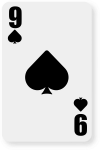

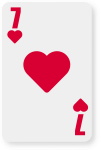
A rough hierarchy of suit structures, from best to worst: double-suited pure, double-triple-suited, single-suited, triple-suited, quad-suited, monotone. Triple- and quad-suited hands without a second suit are among the most common folds against aggression, even when the ranks look strong.
Which suit, not just how many
Because almost half of all hands are double-suited, your opponents hold flush draws constantly. That makes the rank of your suit crucial:
- Ace-high suit: you draw to the nuts and you block the nut flush. This is a major asset.
- King-high suit: still useful, but dominated by the ace of the suit far more often than in 4-card PLO.
- Low suits: mostly a liability in multiway pots. You make flushes that lose to bigger flushes.
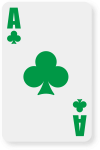
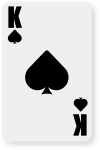
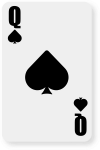

Ace hands have one more distinction: is the ace itself suited? An ace that is not suited to any other card gives you no nut flush potential, and against aggression these "off-suit ace" hands are among the first to fold.
Straight-flush potential
When two connected cards share a suit — for example the J and T of hearts — the hand can make straight flushes. In 4-card PLO this barely matters, but with five cards, flushes and straights collide more often and the solver noticeably prefers suits that connect. Among otherwise similar hands, the one whose suited cards are also connected is usually played more aggressively.
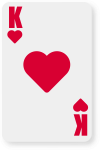

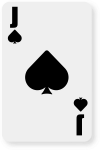
Connectivity: the more, the better
Five cards can form a much tighter straight-making unit than four. A perfect five-card rundown like JT987 flops big wraps very often, and when it hits it tends to hit the nuts. That is why suits matter less for very connected hands: connectivity already supplies nut potential. For loosely connected hands, suit quality becomes decisive.
Where the gaps are
Most rundowns are not perfect. How badly a gap hurts depends on where it is:
- One gap at the bottom (e.g. JT98 + 6): small cost, the hand still makes the high straights.
- One gap at the top (e.g. T + 8765): costs nut potential, but the hand still connects with many middle boards.
- Two adjacent gaps in the middle (e.g. T9 + 654): expensive. The hand loses most of its wraps.
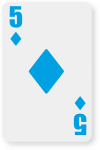
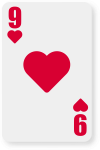
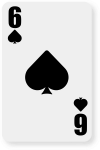
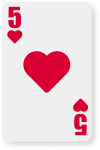
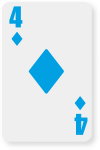
In general, spread-out gaps keep board coverage; gaps next to each other destroy it.
Danglers
A dangler is a card that does not work with the rest of the hand, typically a deuce or trey attached to high cards. In 4-card PLO you would never have it. In 5-card PLO it is a wasted card, and many hands that would be fine with a connected fifth card become folds:

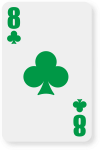

The same hand double-suited (for example with the jack and nine of one suit and the ten and eight of another) is a call. One card's suit decides between folding and defending.
A good habit: when you see four nice cards, ask yourself what the fifth card adds. If the answer is "nothing", treat the hand as a slightly weaker four-card hand competing against opponents who all have five useful cards.
Checklist
- Pure or double-triple? Any third or fourth card of a suit?
- Is one suit ace-high, and is the ace suited?
- Do suited cards also connect (straight-flush potential)?
- How many gaps, and are they adjacent?
- Is there a dangler?
The Starting Hand Analyzer runs through this checklist automatically for any five cards.