Facing a 3-Bet: Call, 4-Bet or Fold
Why you fold far less often than in 4-card PLO
If you come from 4-card PLO, the biggest surprise about facing 3-bets in 5-card PLO is how rarely you should fold. Equities run closer preflop, double-suited hands are common and connected hands carry a lot of equity even against aces. The result is a strategy built around calling, with 4-bets reserved for a narrow set of hands.
Approximate fold frequencies after opening
| You opened from | Facing a 3-bet from | Fold |
|---|---|---|
| Early position | A later seat (you are out of position) | ~10% |
| Middle position | A later seat | ~12% |
| Cutoff | Button | ~16–18% |
| Button | Small or big blind (you are in position) | ~8% |
| Small blind | Big blind | ~28% |
For comparison, an early position opener in 4-card PLO folds roughly a third of his range to a 3-bet. Because the early position range is so strong and so aces-heavy, the early opener is also the one who 4-bets most often — almost exclusively with aces.
Which hands fold?
Two hand types make up the large majority of folds:
- Triple-, quad- or monotone-suited hands. Against a 3-betting range that is mostly double-suited and often holds the nut suit, these hands make dominated flushes and play badly. Even AKQ97 with three of one suit can be a fold.
- Hands with an ace that is not suited, e.g. AQJ97 where the ace has no partner of its suit. Your opponent is very likely to hold the nut suit himself.
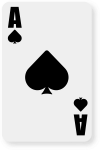
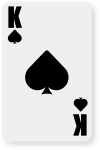
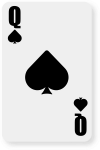


Paired hands follow the same pattern: AKK77 with a trip suit or A-TT-96 without a suited ace are typical folds. If your hand has neither problem, you will usually continue.
When to 4-bet
Two simple rules:
- You almost never 4-bet a hand that is neither aces nor double-suited.
- Once you 4-bet, you never fold to a 5-bet. Even a strong non-aces hand like AKKQT double-suited keeps around 38% equity against double-suited aces.
The non-aces 4-bets are high, very connected, pure double-suited hands with the nut suit — for example AQJ98 or AJT87 double-suited. They tend to unblock kings and queens, because AKK- and AQQ-type hands are the ones most likely to 3-bet and then fold to a 4-bet.


Not all aces 4-bet either. Out of position against a tight 3-bettor, roughly a quarter of aces just call, mostly those with weak, disconnected side cards or bad suits. In position the share of calls rises further. See Playing Pocket Aces.
Position changes the plan
- In position you 4-bet less. A high SPR and position both favour you, so you prefer to call and play postflop.
- Out of position you 4-bet more, especially with aces, to reduce the SPR and the disadvantage of acting first.
- From early position you 4-bet at a high frequency, but almost only aces. From the cutoff against a button 3-bet, more non-aces hands join the 4-betting range.
Exploiting players who 3-bet too much
Many players still 3-bet far too many middle rundowns and single-suited hands. Against them, expand your 4-betting range with hands that dominate those holdings:
- High double-suited rundowns that are not perfectly pure, e.g. AQT98 double-triple.
- High-card hands such as AKQJx double-suited.
- Strong ace-king-king hands with good side cards — the king blocker matters less when your opponent rarely has aces.
Keep the rule about suits: stay double-suited (or holding aces) even when you widen.
Frequencies are approximate values from 100 big blind, 6-max solver studies. Against very loose or very tight 3-bettors, move away from them in the direction described above.