PLO5 by the Numbers: Starting Hand Probabilities
Exact combinatorics for 5-card starting hands
Good preflop decisions start with knowing how often things happen. The figures below were calculated by enumerating every possible 5-card starting hand — all 2,598,960 of them (52×51×50×49×48 / 5!). For comparison, 4-card PLO has 270,725 starting hands.
Suit structure
With five cards and only four suits, at least two of your cards always share a suit — a rainbow hand is impossible. Every hand falls into one of six suit patterns:
| Pattern | Name | Hands | Share |
|---|---|---|---|
| 2-2-1 | Double-suited (pure) | 949,104 | 36.5% |
| 3-2 | Double-triple-suited | 267,696 | 10.3% |
| 2-1-1-1 | Single-suited | 685,464 | 26.4% |
| 3-1-1 | Triple-suited | 580,008 | 22.3% |
| 4-1 | Quad-suited | 111,540 | 4.3% |
| 5 | Monotone | 5,148 | 0.2% |
Some examples of each structure:
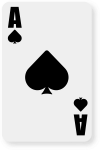
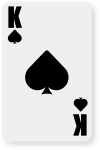

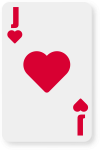


Key numbers:
- 46.8% of all hands are double-suited (pure or double-triple). In 4-card PLO it is only 13.5%.
- 26.8% of hands contain three or more cards of one suit (triple, quad or monotone) — structures that block your own flush outs.
The nut suit
How often do you hold an ace together with at least one other card of the same suit — the ingredient for a nut flush draw?
| Situation | PLO5 | PLO4 |
|---|---|---|
| Ace suited to another card (nut suit available) | 24.6% | 17.0% |
| Double-suited and holding the nut suit | 14.0% | — |
| Pure double-suited with the nut suit | 10.4% | — |
Roughly one opponent in four holds the nut suit before the flop. In a three-way pot, the chance that someone else has it is high — which is why king-high and queen-high flush draws lose so much value in PLO5.
Pairs
| Holding | PLO5 | PLO4 |
|---|---|---|
| Any pair in the hand | 49.3% | 32.4% |
| Exactly one pair | 42.3% | — |
| Two pairs (e.g. KKQQx) | 4.75% | — |
| Exactly two aces | 3.99% | — |
| Two or more aces (incl. trips/quads) | 4.17% | 2.57% |
You are dealt aces about 60% more often than in 4-card PLO. Among all hands with at least two aces, 47% are double-suited, and almost nine in ten (88.5%) are either double-suited or have at least one ace suited.
What this means at the table
- Aces are everywhere. With five opponents at a 6-max table, there is roughly a 19% chance that at least one of them holds a pair of aces (about 12% in 4-card PLO). Big pairs other than aces must be played with that in mind.
- Double-suited is normal, not special. Being double-suited is no longer a reason to play a hand by itself. The question is which suits and how they combine with connectivity.
- Half of all hands contain a pair. Boards pair your opponents' hands constantly, so bare overpairs and low sets lose value.
- The nut suit is a big asset. Because other people's flush draws are so common, holding the ace of a suit is valuable both as a draw and as a blocker.
All figures are exact counts from a full enumeration of starting hands, except the "opponent holds aces" estimate, which treats the five opponents' hands as independent and ignores card removal.