Defending Against C-Bets
Out of position in single raised pots
Most of your postflop decisions out of position come after you defended the big blind and the preflop raiser bets the flop. In PLO5 you face these spots constantly, and the biggest leak is continuing with hands that would be fine in 4-card PLO but are too often dominated with five cards.
Overall frequencies
On typical unpaired flops in a button-versus-big-blind single raised pot, the big blind check-folds close to half of its checking range against a ¾-pot c-bet and check-raises somewhere around 10–15%. Against smaller bets on paired or monotone boards, the folding frequency is much lower — you are getting a better price and must defend more (see the MDF table in Pot Odds, MDF and SPR).
The in-position player's strategy is similar to 4-card PLO: roughly half of the time a c-bet on most boards, ¾ pot on unpaired boards, about ⅓ pot on paired and monotone boards and about half pot on boards where a straight is already possible.
Why your calling threshold must be higher
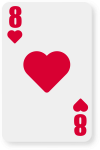
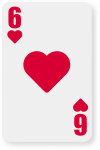
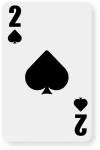
Take an 8-6-2 two-tone flop. In 4-card PLO, the bottom of the calling range against a ¾-pot bet includes a bare nut gutshot, top pair with nothing else, or an overpair with bottom pair. In PLO5, hands like that are folds. The weakest calls need several components that work together:
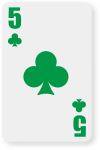
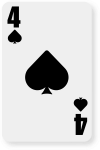
- An open-ended draw plus backdoors. For example QJT75 with a gutshot-plus-open-ender structure, a backdoor flush draw and a card of the flush suit is only a marginal call. Remove the backdoor or the flush-suit card and it becomes a fold.
- A flush draw plus a pair. KQJ76 with a jack-high flush draw and middle pair is close to the bottom. Against a player who bets only strong hands, it is a reasonable fold.
- Even a nut wrap is marginal on a two-tone board. The flush can complete, and your opponent often already holds a better draw or the flush draw that will beat your straight.









Building a check-raising range
The out-of-position player still has hands that want to raise, and you need a check-raise to protect your checks. As in 4-card PLO, you want both value hands and semi-bluffs, but the requirements are higher:
- Value: top two pair is rarely strong enough on its own. To check-raise a dynamic flop for value you want something like top two plus a flush draw and a straight draw. Without that backup, top two pair is usually a check-call — your opponent's continuing range is too strong.Hand
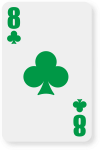

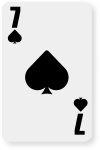 Top two pair with the nut flush draw and straight potential: a value check-raise on 8-6-2
- Semi-bluffs: choose hands with blockers and equity: a nut gutshot together with a pair blocker and a card of the nut flush suit, rather than a pair with a weak flush-suit card.
- Bad-playability hands with good blockers can also be check-raises. A bare top-two hand that hates many turns may prefer to raise now rather than check-call and face difficult decisions.
Don't over-rely on bare blockers
Bluffing with blockers and no equity works poorly out of position. If you check-raise a hand like bare JJ on a flush-draw board and a flush arrives, your bluff has no way to win. Make sure your check-raises carry both fold equity and real equity.
Reading the bettor
- A player who c-bets almost always has many weak hands in his range: defend a little wider and check-raise more often.
- A player who bets only strong hands deserves more folds from your marginal calls.
- Most players at present bet too often when the board is good for them and almost never check strong hands. Their checks are weak — a useful fact for probing the turn.
Remember that checking is not your only option. On many boards the out-of-position player should lead with a part of the range instead of always checking to the raiser.