Leading the Flop (Donk Betting)
Why the out-of-position player bets more often in PLO5
Leading — betting out of position into the player who raised preflop — is often treated as a beginner's mistake. In 5-card PLO it is a central part of correct strategy. Solver-based studies show the big blind leading noticeably more often than in 4-card PLO, on some boards a quarter to a third of the time. Players who check their entire range to the raiser leave a lot of money on the table.
Why leading works better with five cards
- Card removal. Five hole cards tell you more about what your opponent cannot have. When you hit a board hard, you often hold the very cards your opponent would bet with. If you check hoping to check-raise, he simply checks behind and you lose a street of value.
- Protection is worth more. Your opponent's range carries more equity on average, especially in the form of backdoor draws. Betting denies some of that equity.
- More nuttiness out of position. The out-of-position player normally struggles with turns and rivers at high SPR. With five cards he more often holds a nut draw or backdoor that keeps his hand playable when the board changes, which makes building a pot out of position more viable.
Which boards favour leading
- Low and middle connected boards (e.g. 7-5-4, Q-7-6, T-7-5) that hit the caller's range harder than the raiser's.
- Boards where the caller has more two pairs and sets. Even a king-high board can be a leading board if the raiser rarely has KK — which is often true in PLO5, because kings without an ace are not a frequent 3-bet or even open from some seats.
- Boards that are bad for the raiser generally, as long as you have enough strong hands to lead with.
Ace-high boards and boards where the raiser's range is clearly stronger remain mostly checking boards.
Which hands lead and which check-raise
Think about the efficiency of each hand:
- Strong enough to check-raise: hands that are happy to get the money in and don't mind your opponent betting — for example top two pair plus a strong draw on a two-tone board.
- Strong enough to build a pot, but not to check-raise: these are ideal leads. Top and bottom pair with a wrap but no flush draw, for example, wants money in but prefers to call a raise rather than shove over one.
- Too weak to check-call, but with good blockers: some of these become bluff leads or lead-folds, especially hands with a card of the flush suit and future barrel cards.
- Everything else: check-call or check-fold.
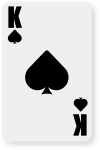

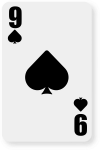
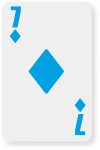
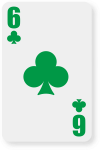
Runouts decide close cases
The more good turns your hand has, the more it wants to lead. A lead commits you to playing later streets out of position, so hands that improve or stay strong on many turns are better leads than hands that become awkward on every card that changes the board.
Suit details matter. Holding several cards of a suit that could arrive as a backdoor draw reduces your fold equity (your opponent has fewer of them) and makes bad runouts more likely for you. Holding one card of that suit, with the ace as a blocker, is the opposite.
Leading strengthens your whole strategy
If the big blind never leads, all of his strong hands sit in his checking range. In theory the raiser should then c-bet less after a check — in one solver comparison on a high-card board, from roughly half the time to roughly a third — and the big blind should check-raise more often than usual to compensate. In practice, most players who never lead also fail to raise more. Against them you can keep c-betting at your normal frequency: a player who neither leads nor check-raises enough is simply easy to play against.
The same logic applies elsewhere
The out-of-position preflop raiser (for example cutoff versus button in a single raised pot, or the small blind in a 3-bet pot) faces very similar SPRs and also bets more often in PLO5 than in 4-card PLO. Understanding leading helps you play all out-of-position spots.