3-Bet Pots and Stack-Off Thresholds
How good does your hand need to be to get it in?
In a 3-bet pot at 100 big blinds the SPR on the flop is around 3.5. Two pot-sized bets get the stacks in, so the flop decision is effectively a stack-off decision. The question is simple to ask and hard to answer: how good does a hand have to be to get it in? In PLO5 the answer is "noticeably better than in 4-card PLO".
The examples below are for the most common setup: the small blind 3-bets the button, the button calls, and the small blind is out of position as the aggressor.
Overall strategy for the 3-bettor
- On low, dry boards (e.g. J-5-3 rainbow) the 3-bettor checks about half the time and bets pot with the rest. Overpairs have good equity and the board misses much of the caller's range.
- On two-tone boards (e.g. K-8-7 with two hearts) the 3-bettor also checks about half the time, mixing half-pot and pot-sized bets. Some hands, such as an overpair with a flush draw but little else, benefit from the larger size to deny equity.
- On low, straight-heavy boards and boards that hit the caller's range, the 3-bettor bets less — often only around 40% — and uses smaller sizes.
Compared with 4-card PLO, the main difference is that bare overpairs have less equity, so fewer of them can bet and stack off.
Dry board: what aces need
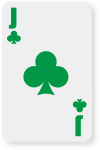
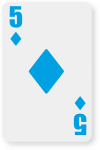
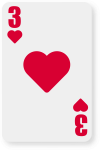
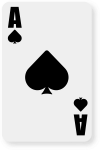
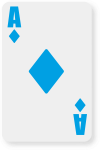

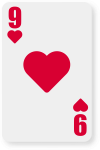
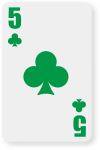
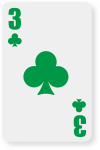
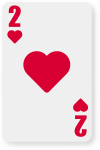
In 4-card PLO, an overpair on J-5-3 is almost always a stack-off. In PLO5 aces need at least some backup — ideally a backdoor to the nut flush and a few backdoor straights. Without that, they are a bet-fold.
Facing a pot-sized bet in position
The caller folds roughly half of his range against a pot-sized c-bet on dry boards. Three useful categories:
- Overpairs below aces without the nut backdoor, such as queens with a queen-high backdoor and a gutshot, are close to the bottom and usually fold. They run into aces with backup too often.
- Turn-dependent hands — top pair with many backdoor straight and flush draws, for example JT987 on J-5-3 — should call rather than shove. On a seven, eight, nine or ten they improve to a wrap or two pair and can get it in; on an ace or a five they can fold.
- Hands that never fold on the turn, such as an overpair with two backdoor flush draws including the nut backdoor and a gutshot, should simply shove. There is no turn where you'd fold, so you might as well use the small amount of fold equity you have now.

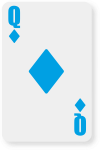
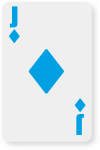
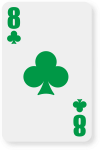
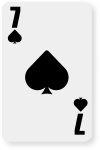
Two-tone boards: the nut flush draw is king
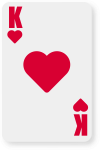
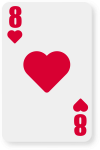
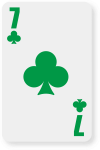
On flush-draw boards, straight draws lose a lot of value: your opponent's stack-off range is full of flush draws, and the flush draw that matters is the nut one.
- Overpair plus the nut flush blocker only (aces with the ace of hearts and a backdoor, but no heart draw) is a typical pot-and-fold hand: good to bet because it blocks the hands that continue, but not strong enough against a raise.
- Overpair plus a real flush draw — even without a straight draw — is a marginal stack-off.
- Top pair with the second-nut flush draw is strong enough to shove over a raise; top and bottom pair without a heart is a half-pot bet that calls a raise and decides on the turn.
- As the caller facing a bet, a wrap without a flush draw is often a fold against a pot-sized bet on two-tone boards. With the nut flush draw, even a modest made hand becomes a shove.
Paired and straight boards
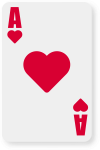
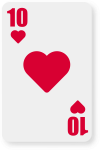
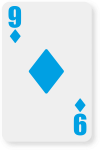
On boards like Q-9-9 two-tone, the 3-bettor c-bets about half the time for a small size. Aces with the nut backdoor flush and a pair blocker are good bets but fold to a raise, because blocking the nut flush also blocks many of the hands your opponent would raise as a bluff. Aces with a wrap can sometimes re-shove: they gain more from folding out flush draws than an overpair with a flush draw does.
On low straight boards, even a high overpair with the second-nut flush draw and double straight blockers can be a bet-fold. Without nuttiness, blocking the straight is not enough when the caller raises.
Rules of thumb
- An overpair needs nutted backup to stack off — nut backdoors on dry boards, a real flush draw on two-tone boards.
- On flush-draw boards, the nut flush draw is the most important component of a stack-off hand; straight draws matter much less.
- Turn-dependent hands call; hands without folding turns shove.
- Against players who raise only strong hands, fold the weakest stack-offs; against players who shove too wide, call down more.