Opening Ranges by Position
How wide to raise first in from every seat at a 6-max table
Opening the pot with a raise is the most frequent preflop decision you make. The good news: opening frequencies in 5-card PLO are close to those of 4-card PLO. The challenge: the hands that make up those ranges are different, and many hands that look like easy opens are folds.
Approximate raise-first-in frequencies (6-max, 100bb)
| Position | Open raise | Typical bottom of range |
|---|---|---|
| Early position (UTG) | ~17–18% | Aces, strong double-suited broadway hands, very connected double-suited rundowns |
| Middle position | ~22% | Adds more single-suited connected hands and kings with good side cards |
| Cutoff | ~30% | Adds weaker double-suited rundowns and two-broadway hands with the nut suit |
| Button | ~45–48% | Most double-suited hands with some connectivity; well-connected single-suited hands |
| Small blind | ~33% raise, ~6% limp | A raising range close to the cutoff's plus some limps |
At 50 big blinds the ranges tighten, especially on the button (roughly 35%), because low connected hands lose implied odds and high-card hands gain value.
What earns a place in an early position range
From the first seats you will face up to five players behind you, and you will be 3-bet relatively often. Your hands need to play well in 3-bet pots and multiway pots. That points to:
- Aces — almost all of them (excluding trip aces).
- High double-suited rundowns with the nut suit.
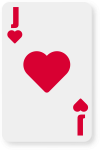
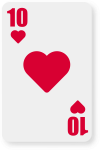
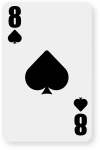
- Very connected double-suited middle rundowns — even a hand like JT875 double-suited is a narrow but profitable open.
- Kings and queens only with strong support: an ace, excellent connectivity, or two high suits.
Hands that look better than they are
- Single-suited middle rundowns. 98654 single-suited is a fold even on the button; 87654 single-suited, a perfect connector, is roughly the bottom of a 50bb button range.
- Paired rundowns with a trip suit. 98875 with three of one suit is a fold in the cutoff.
- Double-suited kings without connectivity or an ace. KKT32 double-suited is a fold from middle position.
- Hands with two adjacent gaps. T9854 double-suited is a fold in the cutoff at 50bb.
Adjusting for rake and table conditions
- Higher rake: opponents should cold call and defend less, which in theory lets you open slightly wider. In practice, high-rake games are usually low stakes where players call too much anyway — so open tighter.
- Loose, passive tables: when many players enter every pot, you will play more multiway pots. Multiway pots reward nuttiness, so tighten up and favour hands with the nut suit and high connectivity. You play fewer hands, but the ones you play earn much more.
- Antes or straddles: more dead money means you can open wider. With a large straddle or ante, you may also prefer a slightly smaller open than the full pot.
- Weak players in the blinds: a reason to open a few extra hands from the cutoff and button.
Isolating limpers
When someone limps in front of you, your raising range should be tighter than your normal opening range from that seat: there is little fold equity, the pot goes multiway more often, and the limper can still re-raise. A practical rule is to use roughly the opening range of one position earlier — for example, from the cutoff, raise over a limper with roughly a middle position range. See Squeezing, Limpers and Multiway Pots.
Frequencies are approximate values from 100 big blind, 6-max solver studies with typical online rake. Use them as a baseline and compare them with your own statistics in a tracker.