Playing Rundowns in 5-Card PLO
Connectivity is power, but only near the top of the deck
Rundowns — hands made of connected cards — are the most "PLO5-specific" category. Five connected cards produce straight draws that are impossible in 4-card PLO, and a perfect rundown flops huge wraps on a wide range of boards. At the same time, rundowns are where 4-card instincts mislead players the most: middle and low rundowns lose a lot of value, and small flaws turn opens into folds.
Why connectivity is so powerful
With four cards, a rundown like JT98 gives you six two-card combinations to make straights with. With five cards, JT987 gives you ten. The extra card fills more gaps, creates more wraps and, crucially, gives more nut straight draws. Connectivity acts as a source of nuttiness: a perfectly connected hand is less dependent on its suits, because it reaches the nuts through straights.

High beats low
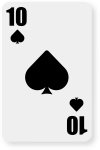
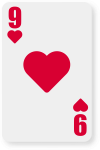
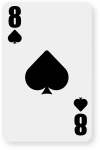
The top of the deck matters. A high rundown makes the top straight when it hits; a low rundown often makes the bottom end of a straight while an opponent with higher connected cards makes the top end. With five cards per player, that collision happens constantly.
- Broadway and jack-high rundowns are premium hands, especially double-suited with the nut suit. They open from every position and 3-bet often.
- Ten- and nine-high rundowns are good opens in later positions when double-suited, but they 3-bet far less than in 4-card PLO and rarely 4-bet.
- Eight-high and lower rundowns are mostly late-position hands. Single-suited, only the perfect connectors survive, and only on the button.
Gaps
Gaps are the main reason a rundown slips out of a range:
- A single gap near the bottom costs little.
- A single gap at the top costs nut potential, but the hand still covers many middle boards.
- Two gaps next to each other in the middle are the worst case — the hand stops making wraps.
Interestingly, among low and middle rundowns that are not perfect, the solver often prefers gaps spread out (for example one at the top and one at the bottom) because they keep board coverage. What it dislikes is a cluster of missing ranks.

A pair inside the rundown
A paired card in a rundown, such as 98875, replaces a connecting card with a duplicate. Add a trip suit and the hand becomes a cutoff fold, even though it looks like five connected cards. Rundowns with a pair need excellent suits to be played.
3-betting rundowns
Rundowns are classic pushing hands in 4-card PLO: you 3-bet them to isolate and play a smooth, connected hand heads-up. In PLO5, only the best rundowns do this:
- High, pure double-suited rundowns with few gaps are the main non-pair 3-bets, for example KQ986 or QT976 double-suited on the button against a cutoff open.
- Double-triple-suited versions of the same hands usually only call.
- Middle rundowns such as 98764 double-suited fold in the small blind against a button open; they are dominated too often by higher straights and flushes.
- Unpaired rundowns are rarely 4-bets, and when they are, they are high, pure, contain the nut suit and avoid kings and queens.

Single-suited rundowns
Single-suited rundowns lose much more value than in 4-card PLO, because their flush potential is so low compared with the field. JT875 double-suited is an early position open; the same ranks single-suited are not. Expect to play single-suited rundowns mostly from the button and the blinds, and mainly when they are perfectly connected and high.
Rundown checklist: How high is the top card? Five connected cards or four plus a dangler? Where are the gaps? Any pair inside? Pure double-suited, double-triple or single-suited? Does one of the suits run to the ace?